
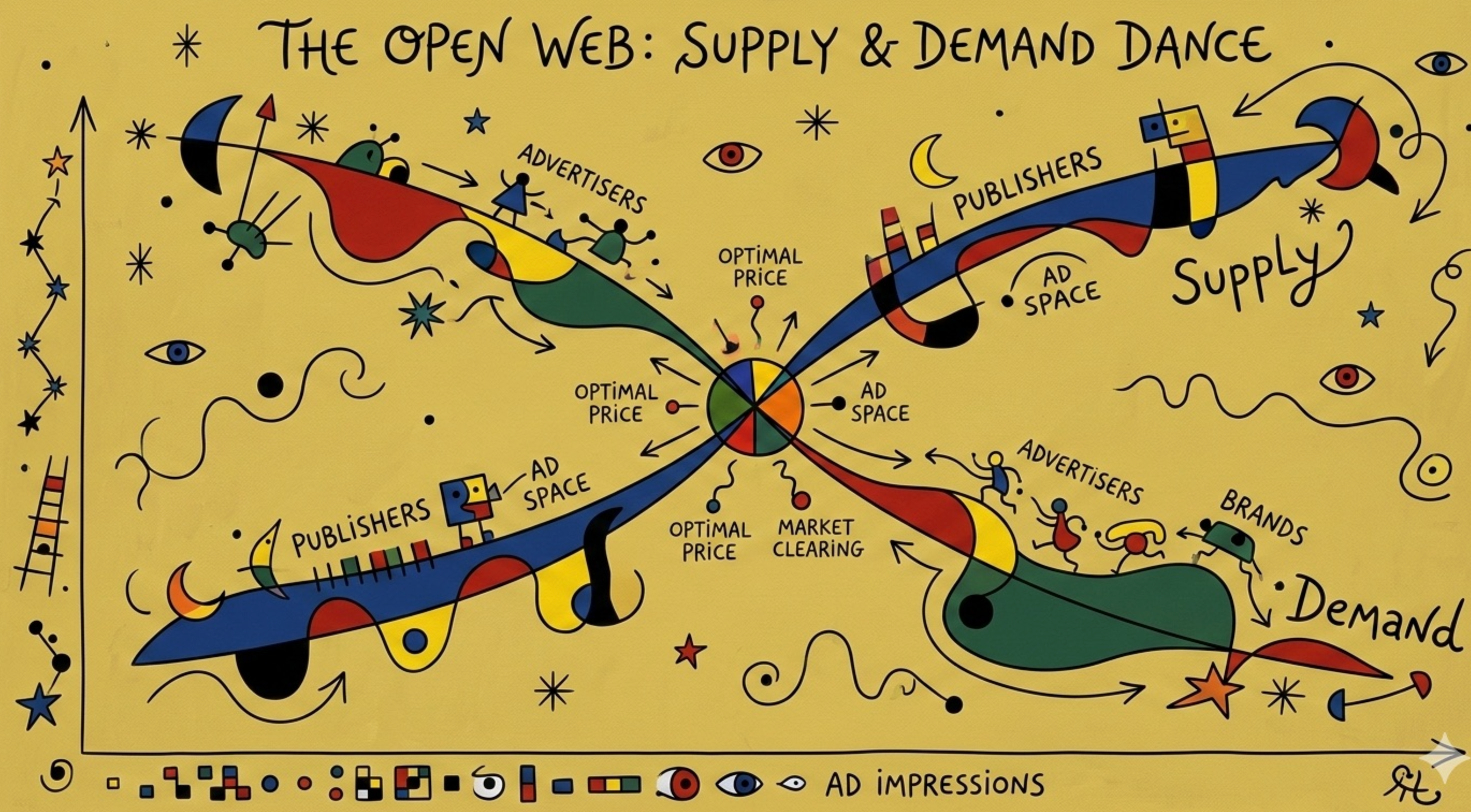
We have something special in store at the Advertising Economic Forum this Thursday at The New York Times Center. We partnered with AdWeek to create a live interview studio and talk about a single important subject.
Back in 2024, when we first launched the forum, an important question arose on stage that caused a ton of debate:
Will there be websites in the future?
Flash forward to March 2026, and we can all see that websites are still around, albeit with reduced traffic and pressure to tweak the publisher business model as fast as possible in the AI era.
Throughout the morning this Thursday (March 19), we are handpicking ~25 attendees to ask them a simple question in 5-minute interviews. One question, many points of view.
“What is the future of the open web? And how must it reinvent itself to increase its relevance in the advertiser’s mind?”
A few sub-questions might be:
Why should advertisers care about the open web? What has to change for the open web to stay relevant as an adverting medium?
If you want to chime in at our AdWeek interview studio, get your ticket today.
History of the Open Web told through the lens of supply and demand
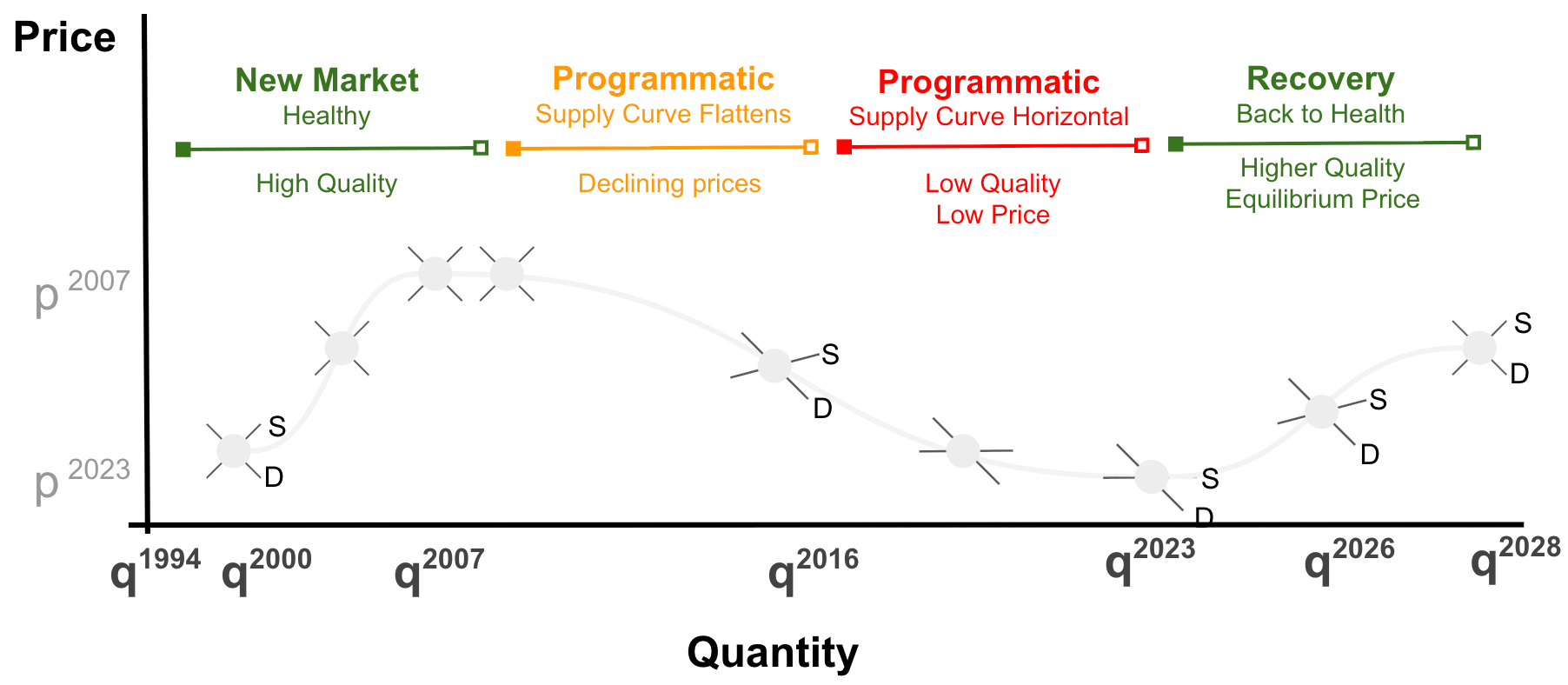
In the Beginning, 1994-2005: Let’s start with the initial equilibrium state of a healthy market for open web banner ads in 2005.
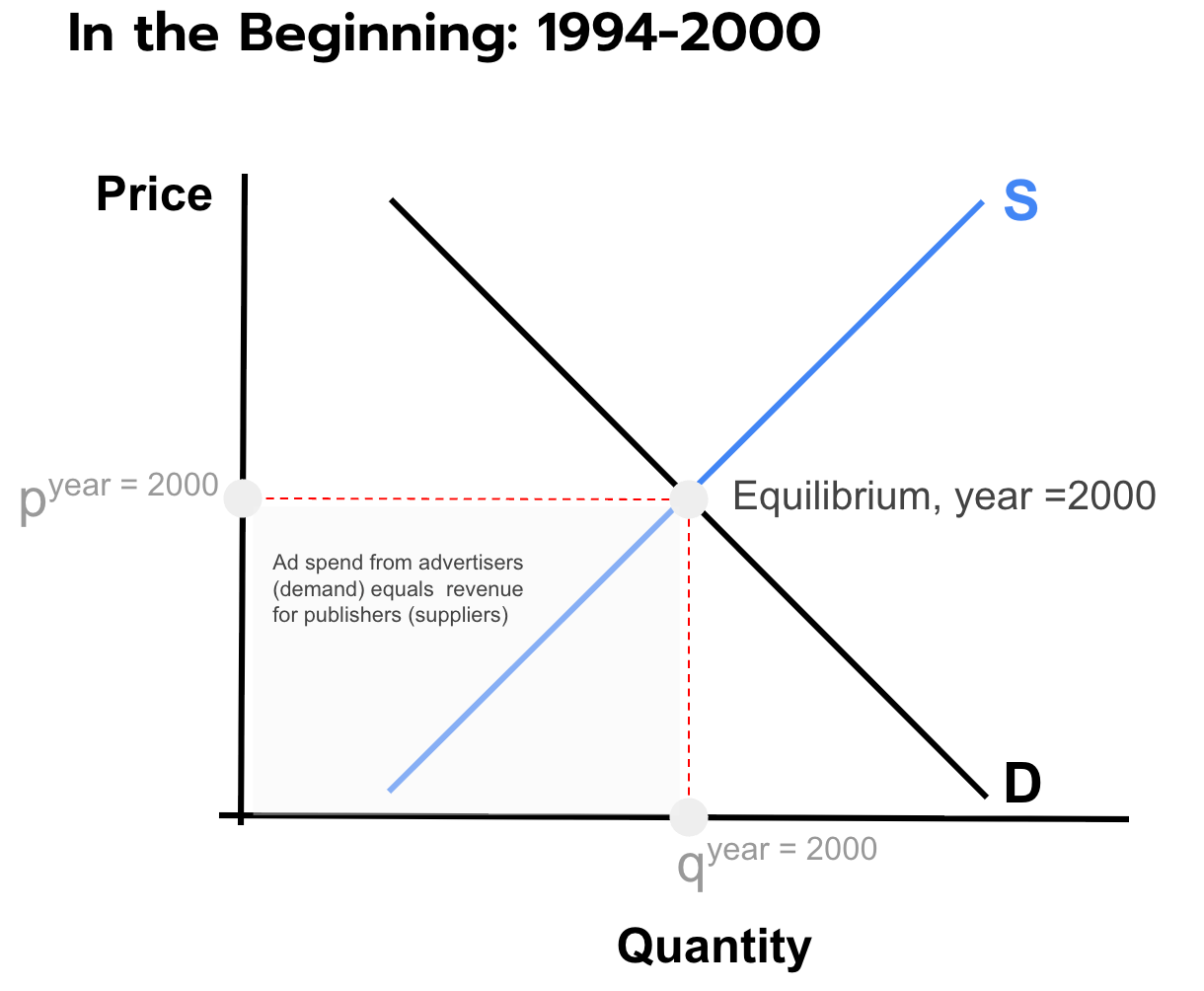
Website display ads started on October 27, 1994, when the first web banner ad appeared on HotWired.com (the online counterpart to Wired magazine). It was created by agency Modem Media for AT&T. The ad featured a 468x60 pixel banner with the text:
“Have you ever clicked your mouse right here? You will.”
By 2007, Advertiser demand grew, and publisher supply kept pace
By 2007, demand and supply looked normal. Total ad spend on web banners was roughly $15B (the grey rectangle). In the first era of digital advertising, most ad-supported websites were focused on the “onlining” of old-school offline newspapers and magazines. There were also new digital-first publications.
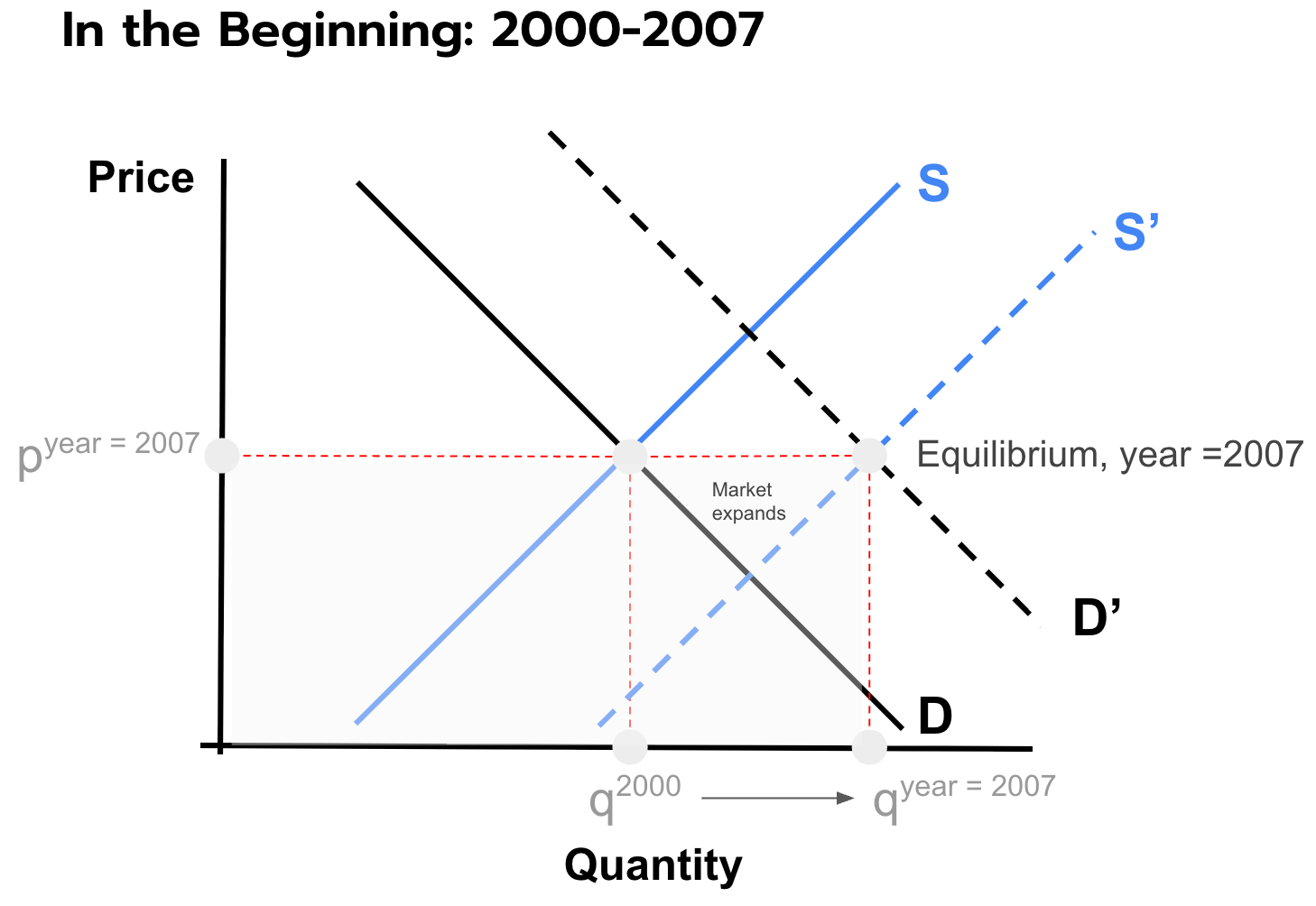
CPM prices were around $10 (P) on a weighted average, for example:
Premium publisher display = $15 – $30 CPM
Run-of-site banners = $5 – $15 CPM
Ad network inventory = $1 – $5 CPM
Remnant/performance networks = $0.50 – $2 CPM
Back then, in 2007, there were around 1.2 billion internet users. Today, there are over 6 billion. That means quantity sold (Q) was around 1.5 trillion impressions or about 3.5 ads per day per user on average. Who knows what the number is today? All we know is that users get tons of open web display ads, of which many they never see.
Programmatic is Born: ~2007 to 2016
When programmatic came along, the supply curve started to flatten and shift because it was easy to produce new inventory. Like alchemy that produces false gold, there was an increasing ability for any publisher, big or small, to create infinite audiences, new traffic, and new supply.
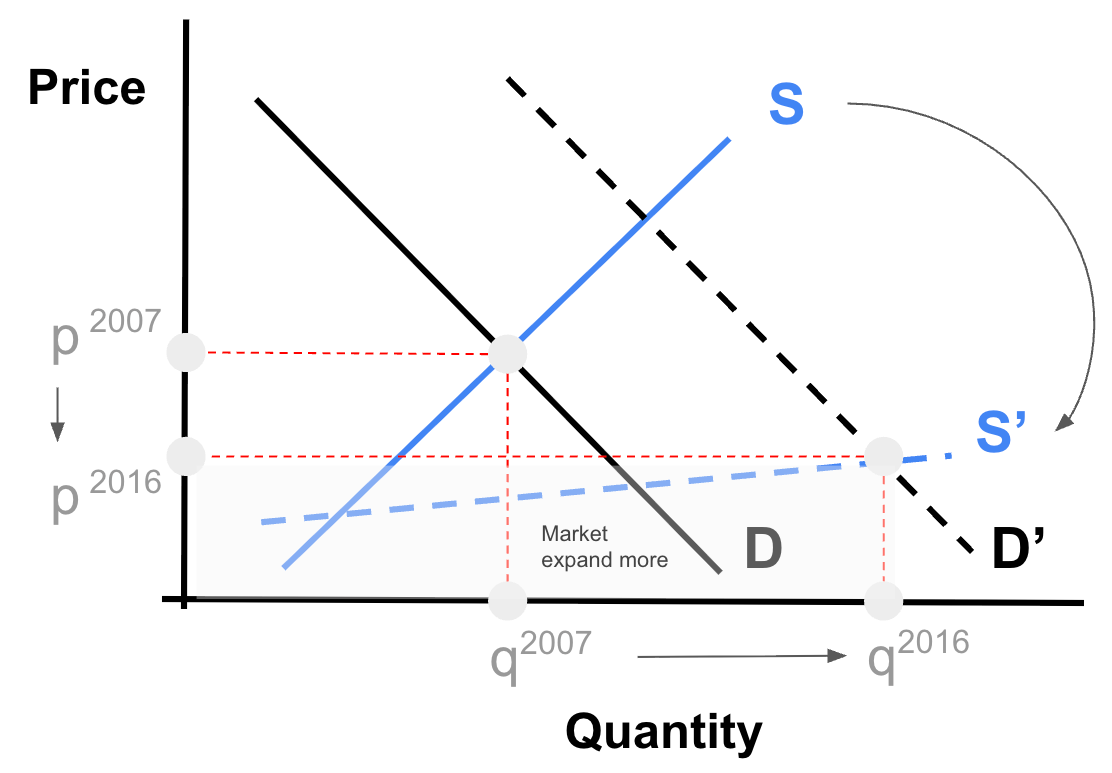
As a result, CPM prices for open web banner ads started to fall while the magic elixir and allure of “audience targeting” grew at a robust pace, increasing the total market size.
Supply is Flat: 2016 to 2023
When something is too good to be true, it probably is. By 2023, open web display ad sales were mostly done programmatically between DSPs and SSPs with data providers in the middle.
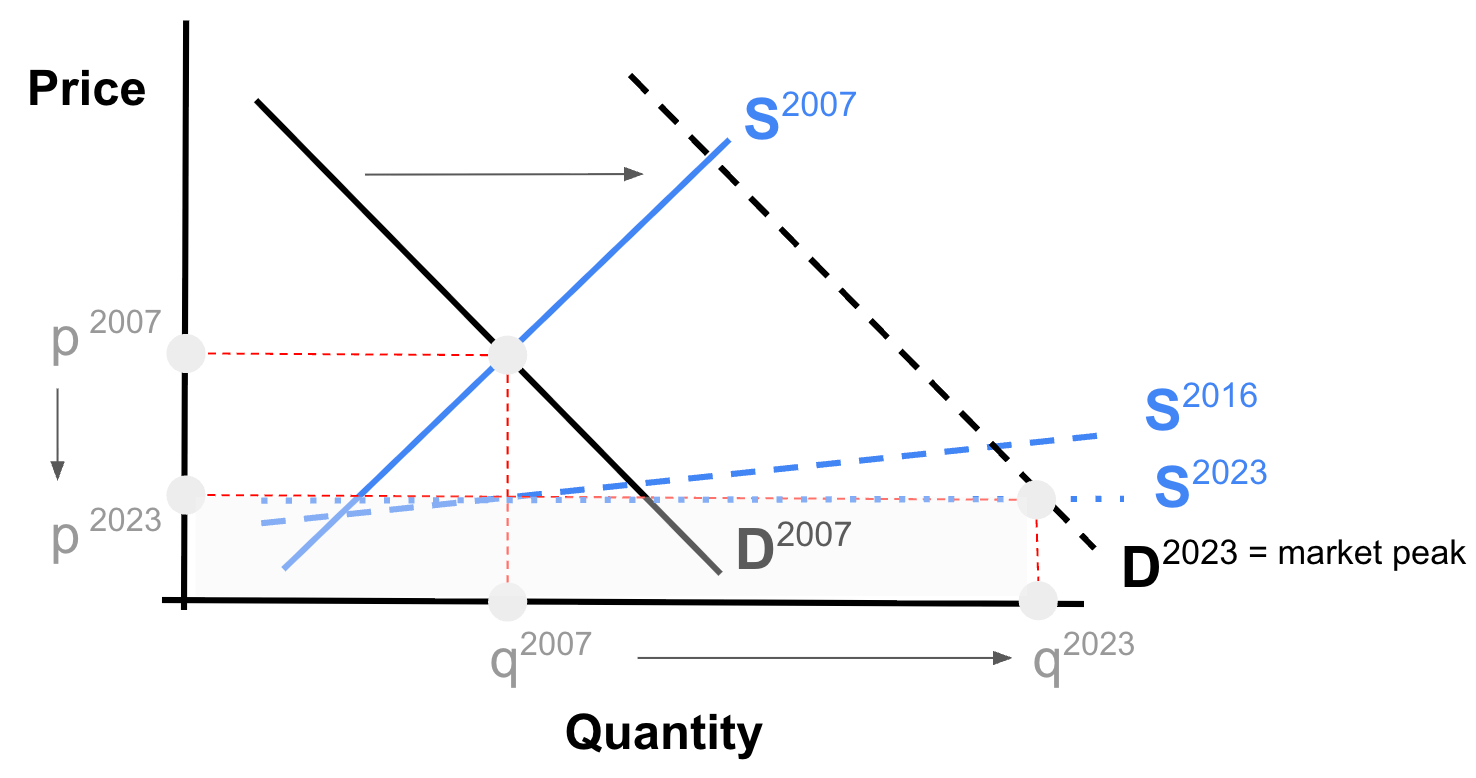
Even though supply was essentially flat, demand continued to grow despite warnings from various industry associations, with one “working media” research report after another. Quo Vadis wrote about this in an article called Funky Town and The Way The [AdTech] World Works. The article describes how demand was procurement-led, and suppliers simply produced what they wanted — “cheap reach.”
Present Day 2026
Just as market theory and the lemon market theory would predict, demand from advertisers has run out of patience.
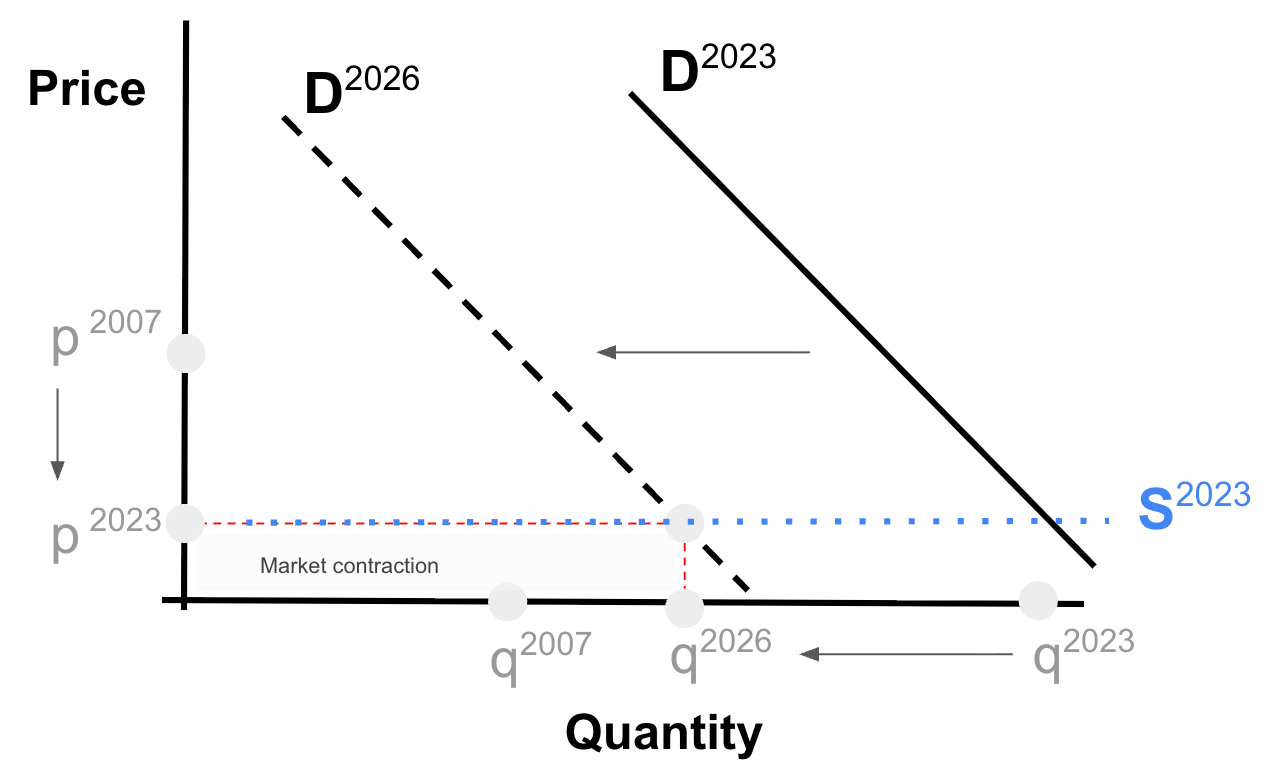
Now they are pulling back and shifting attention to the GenAI world, where eyeballs are increasingly flowing.
Good news taking form in 2026 and 2027
The interesting thing about LLMs is their need for good information. Good sites provide useful information, bad sites don’t. The more users spend time in chatbot environments and use agents to complete tasks, the more LLMS will need to eat the good stuff.
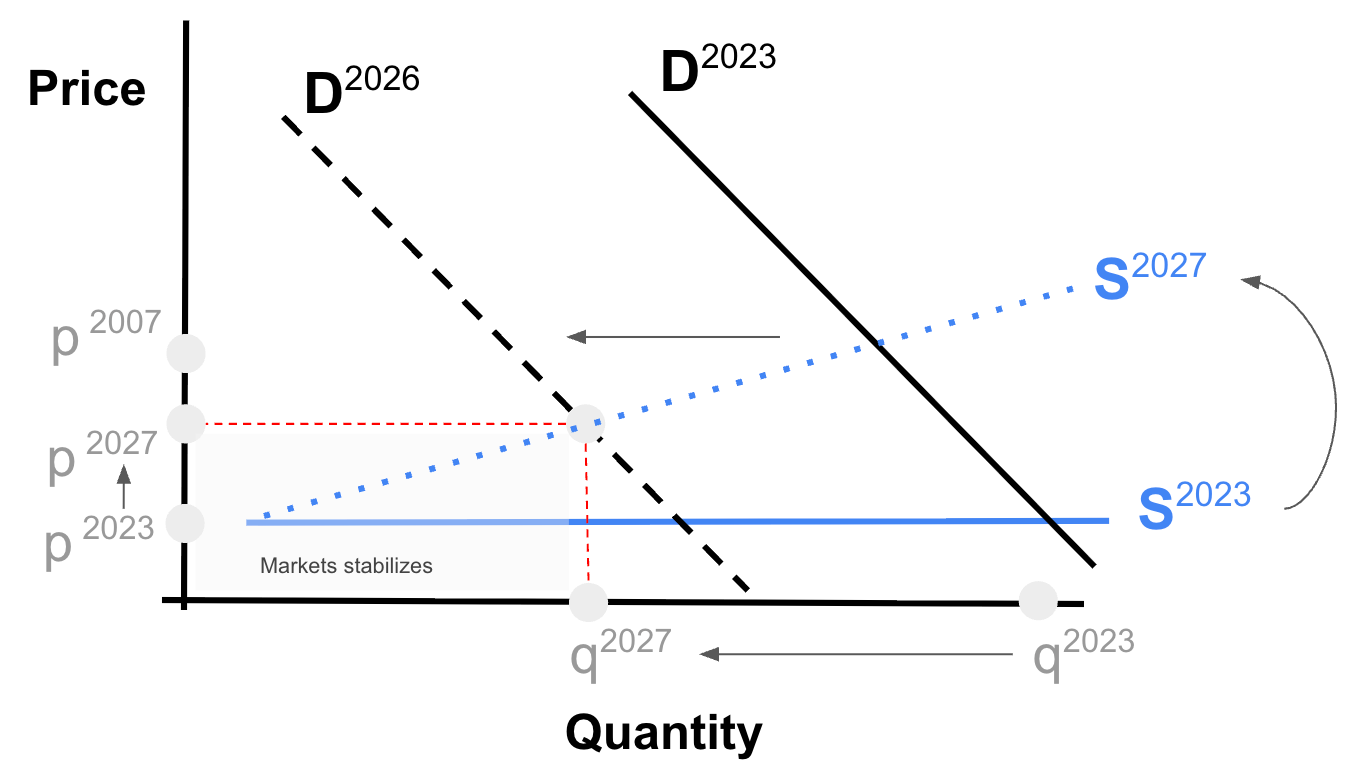
We can also envision a future in which LLMs will have to account for a Cost of Goods Sold (COGS) expense called “publisher data acquisition cost.”
As of 2025, total global ad spending was ~$1.2 trillion. We think it’s safe to assume 6% annual growth over the next five years, so total global ad spend will be ~$1.6 trillion in 2030. Note that Brian Wieser from Madison & Wall is forecasting 8.1% this year.
That means $400 billion of new media money is coming online over the next five years. We don’t think it is hard to imagine GenAI ads on OpenAI and other apps reaching $100 billion by 2030. If we assume a 5% COGS going to publishers, that’s $5 billion extra on top of ad revenue.
The Case for 2028
The more publishers convert old programmatic thinking into better advertising propositions, the quicker the supplier curve will recover and return to a normal state, like it was way back in 2000.
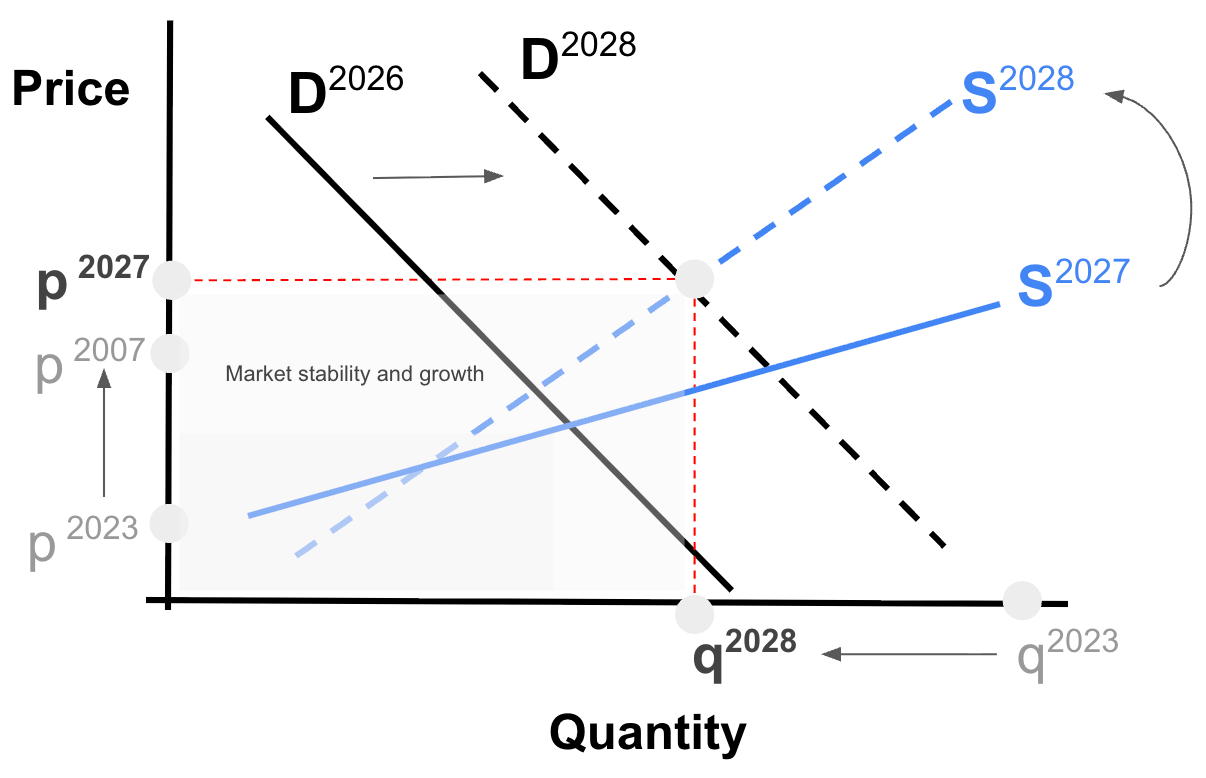
At the same time, advertisers will start to see the open web in a new light and, hopefully, reward great outcomes with increased demand.
Lower revenue with more profit is a great outcome
Here’s a test for publisher management teams:
Would you rather have $100 in ad sales and $10 in operating profit OR $60 in ad sales and $13 in operating profit.
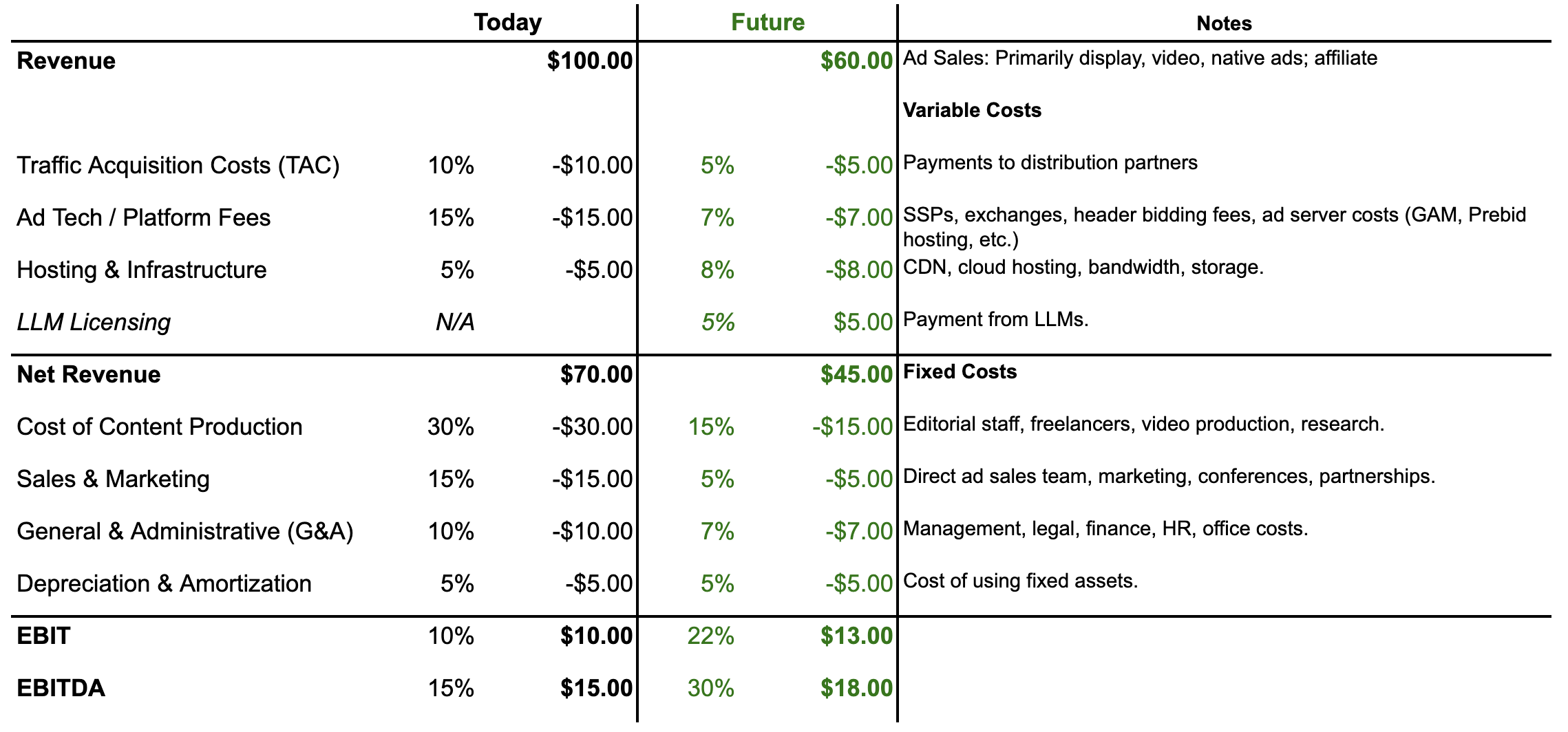
The supply curve recovers to a normal state in the Recovery Stage.
Low-quality publishers get boxed out of the market.
Some variable costs ꜜdecrease (TAC, tech fees).
Other variable costs ꜛincrease (data movement, AI usage).
Add in LLM licensing revenue (COGS for LLM, revenue for publishers).
All fixed costs decrease primarily due to increased AI-assisted labor productivity.
Result: A smaller market universe, but more profits.
If you want to chime in at our AdWeek interview studio, get your ticket today.
Disclaimer: This post, and any other post from Quo Vadis, should not be considered investment advice. This content is for informational purposes only. You should not construe this information, or any other material from Quo Vadis, as investment, financial, or any other form of advice.
I'd love to see an economist's take on what these curves look like for a differentiated supply landscape. How does the beef market look with different quality levels and prices that shift based on scarcity and evolving demand pools? If the demand side was rational and valued quality, what would the market look like?